
Packages (Simulation)
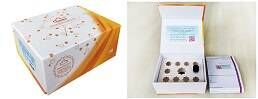
Image (II)
-
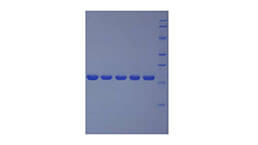
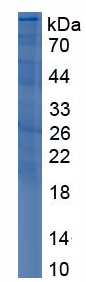 Figure. SDS-PAGE
Quality Guarantee

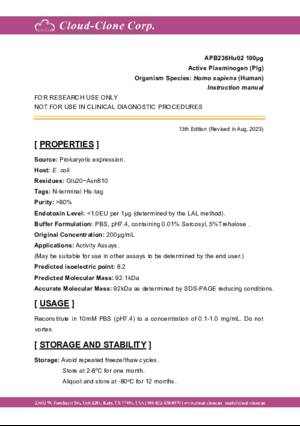
Instruction Manual
Certificate
Active Plasminogen (Plg)
PL; Plasmin; Activation peptide; Angiostatin
- Product No.APB236Hu02
- Organism SpeciesHomo sapiens (Human) Same name, Different species.
- Buffer FormulationPBS, pH7.4, containing 0.01% SKL, 5% Trehalose.
- Traits Freeze-dried powder
- Purity> 80%
- Isoelectric Point8.2
- ApplicationsCell culture; Activity Assays.
- DownloadInstruction Manual
- UOM 10µg50µg 200µg 1mg 5mg
- FOB
US$ 132
US$ 329
US$ 658
US$ 1974
US$ 4935
For more details, please contact local distributors!
ACTIVITY TEST
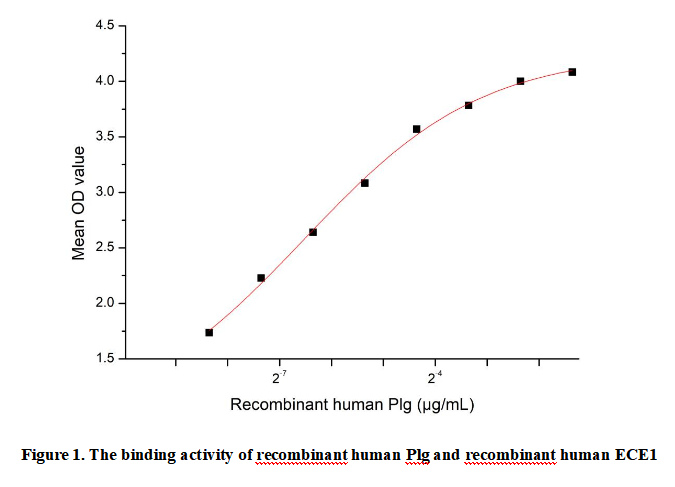
Plasminogen (Plg) is a glycoprotein predominantly synthesized in the liver and circulates in plasma as the zymogen (inactive precursor) of plasmin. It serves as a central mediator in fibrinolysis, extracellular matrix (ECM) degradation, and tissue remodeling processes. Upon activation by tPA or uPA, Plg is converted into plasmin—a broad-spectrum serine protease that participates in thrombolysis, cell migration, and inflammatory responses. Notably, emerging evidence suggests that Plg interacts with ECE1; this interaction may modulate Plg’s activation or spatial localization in vascular environments and inflammatory contexts.To detect the activity of recombinant Plg, a functional ELISA assay was performed to evaluate the interaction between recombinant human Plg and recombinant human ECE1. Briefly, biotin-linked Plg were diluted serially in PBS, with 0.01% BSA (pH 7.4). Duplicate samples of 100µl were then transferred to ECE1-coated microtiter wells and incubated for 1h at 37℃. Wells were washed with PBST 3 times and incubation with Streptavidin-HRP for 30min, then wells were aspirated and washed 5 times. With the addition of substrate solution, wells were incubated 15-25 minutes at 37℃. Finally, add 50µl stop solution to the wells and read at 450nm immediately. The binding activity of Plg and ECE1 was shown in Figure 1, the EC50 for this effect is 0.01µg/mL.
USAGE
Reconstitute in 10mM PBS (pH7.4) to a concentration of 0.1-1.0 mg/mL. Do not vortex.
STORAGE
Avoid repeated freeze/thaw cycles. Store at 2-8°C for one month. Aliquot and store at -80°C for 12 months.
STABILITY
The thermal stability is described by the loss rate. The loss rate was determined by accelerated thermal degradation test, that is, incubate the protein at 37°C for 48h, and no obvious degradation and precipitation were observed. The loss rate is less than 5% within the expiration date under appropriate storage condition.
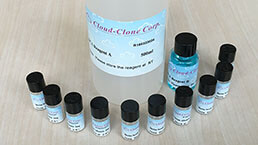
GIVEAWAYS
INCREMENT SERVICES
-
 BCA Protein Quantification Kit
-
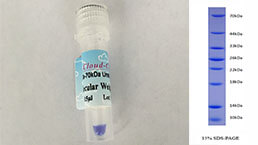 Molecular Mass Marker for Protein
-
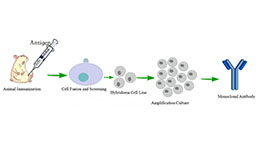 Monoclonal Antibody Customized Service
-
 Polyclonal Antibody Customized Service
-
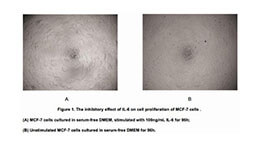 Protein Activity Test Experiment Service
-
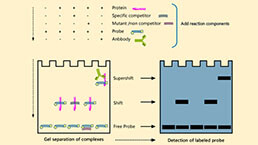 Electrophoretic Mobility Shift Assay (EMSA) Experiment Service
-
 Buffer
-
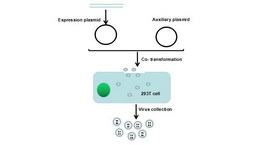 Lentivirus Packaging Experiment Service
-
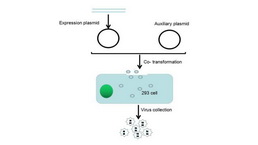 Adenovirus Packaging Experiment Service
-
 Real Time PCR Experimental Service
-
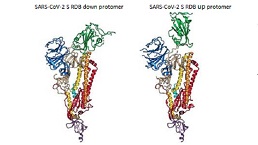 Spike RBD Protein (S-RBD)
-
 Protein G
-
 Protein A
| Magazine | Citations |
| International Journal of Molecular Sciences | The Anticoagulant Effect of PGI2S and tPA in Transgenic Umbilical Vein Endothelial Cells Is Linked to Up-Regulation of PKA and PKC Mdpi: Source |
| J Anim Physiol Anim Nutr (Berl). | Improved milk production through PG-PL system by provision of in-house shelter management in lactating Murrah buffaloes during winter season. pubmed:28084661 |
| Neurotherapeutics | iTRAQ-Based Quantitative Proteomics Reveals the New Evidence Base for Traumatic Brain Injury Treated with Targeted Temperature Management pubmed:29247448 |
| Veterinarski Arhiv | The influence of a modified micro-environment on stress and milk production through the plasminogen-plasmin system in Murrah buffaloes during the hot-humid … 10.24099:vet.arhiv.170113 |
| Food Bioscience | Reducing antigenicity of ¦Â-lactoglobulin, probiotic properties and safety evaluation of Lactobacillus plantarum AHQ-14 and Lactobacillus bulgaricus BD0390 |
| Foods | Antigenicity and Safety Evaluation of Lactiplantibacillus plantarum 7-2 Screened to Reduce α-Casein Antigen Pubmed:35010214 |