
Packages (Simulation)
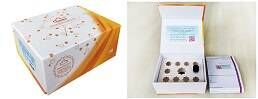
Image (II)
-
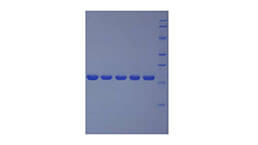
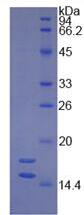 Figure. SDS-PAGE
Quality Guarantee

Instruction Manual
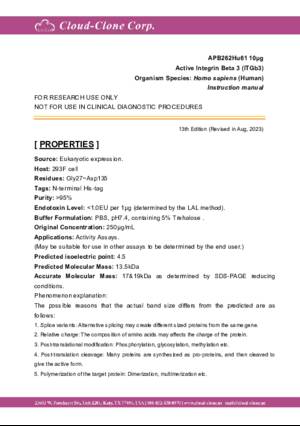
Certificate
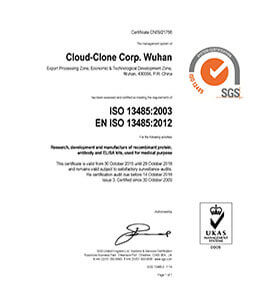
Active Integrin Beta 3 (ITGb3)
CD61; ITG-B3; GP3A; GP3-A; GpIIIa; Platelet Membrane Glycoprotein IIIa
- Product No.APB262Hu61
- Organism SpeciesHomo sapiens (Human) Same name, Different species.
- Buffer FormulationPBS, pH7.4, containing 5% Trehalose.
- Traits Freeze-dried powder
- Purity> 95%
- Isoelectric Point4.5
- ApplicationsCell culture; Activity Assays.
- DownloadInstruction Manual
- UOM 10µg50µg 200µg 1mg 5mg
- FOB
US$ 192
US$ 480
US$ 960
US$ 2880
US$ 7200
For more details, please contact local distributors!
ACTIVITY TEST
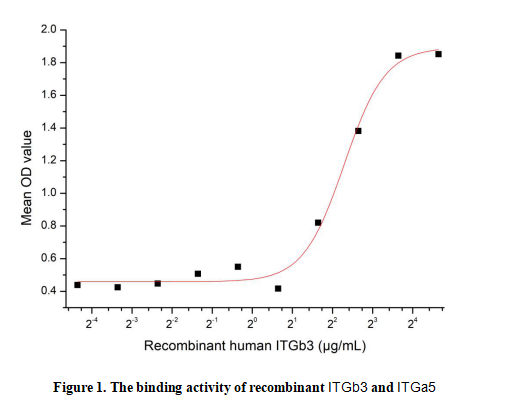
Human Integrin Beta 3 (ITGb3), a critical transmembrane glycoprotein subunit encoded by the ITGB3 gene, is abundantly expressed in human platelets, endothelial cells, osteoclasts and tumor cells. As a core subunit of integrin heterodimers, human ITGb3 non-covalently couples with specific alpha subunits to mediate cell adhesion, migration, proliferation and survival by binding extracellular matrix (ECM) proteins such as fibrinogen and vitronectin. Its activation is stringently modulated by intracellular signaling pathways, and the dysregulation of human ITGb3 is closely associated with multiple pathological conditions including thrombotic disorders, cancer metastasis and osteoporosis. In human platelets, the ITGb3-containing αIIbβ3 heterodimer serves as a central receptor for fibrinogen cross-linking, which is indispensable for platelet aggregation and blood clot formation; in tumor biology, it promotes angiogenesis and tumor cell invasion through interactions with the tumor microenvironment. Human ITGb3 physically binds to Rat ITGa5 to form the α5β3 heterodimer, which enhances cell adhesion to fibronectin in the ECM.Briefly, ITGa5 was diluted serially in PBS with 0.01% BSA (pH 7.4). Duplicate samples of 100 μl were then transferred to ITGb3-coated microtiter wells and incubated for 1h at 37℃. Wells were washed with PBST and incubated for 1h with anti-ITGa5 pAb, then aspirated and washed 3 times. After incubation with HRP labelled secondary antibody for 1h at 37℃, wells were aspirated and washed 5 times. With the addition of substrate solution, wells were incubated 15-25 minutes at 37℃. Finally, add 50 µL stop solution to the wells and read at 450/630nm immediately.Measured by its binding ability in a functional ELISA. When Recombinant ITGb3 is lmmobilized at 2 µg/mL(100 uLwell), the concentration of ITGa5 that produces 50% optimal bindingresponse is found to be approximately 4.89 µg/mL.
USAGE
Reconstitute in 10mM PBS (pH7.4) to a concentration of 0.1-1.0 mg/mL. Do not vortex.
STORAGE
Avoid repeated freeze/thaw cycles. Store at 2-8°C for one month. Aliquot and store at -80°C for 12 months.
STABILITY
The thermal stability is described by the loss rate. The loss rate was determined by accelerated thermal degradation test, that is, incubate the protein at 37°C for 48h, and no obvious degradation and precipitation were observed. The loss rate is less than 5% within the expiration date under appropriate storage condition.
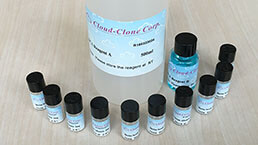
GIVEAWAYS
INCREMENT SERVICES
-
 BCA Protein Quantification Kit
-
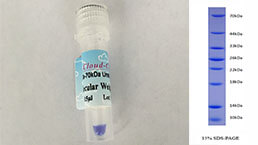 Molecular Mass Marker for Protein
-
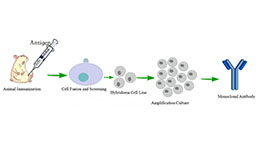 Monoclonal Antibody Customized Service
-
 Polyclonal Antibody Customized Service
-
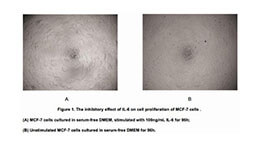 Protein Activity Test Experiment Service
-
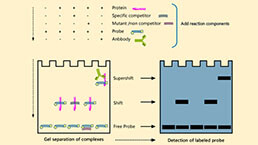 Electrophoretic Mobility Shift Assay (EMSA) Experiment Service
-
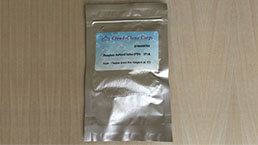 Buffer
-
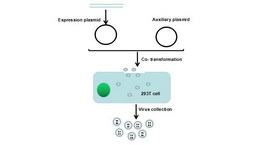 Lentivirus Packaging Experiment Service
-
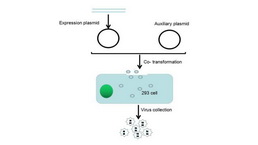 Adenovirus Packaging Experiment Service
-
 Real Time PCR Experimental Service
-
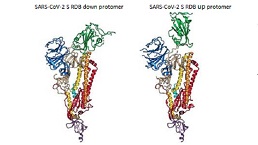 Spike RBD Protein (S-RBD)
-
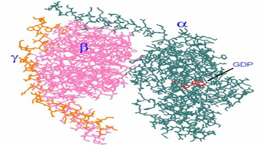 Protein G
-
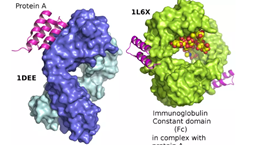 Protein A
| Magazine | Citations |
| BMC Complement Med Ther | Decursinol from Angelica gigas Nakai enhances endometrial receptivity during implantation Pubmed: 32024510 |